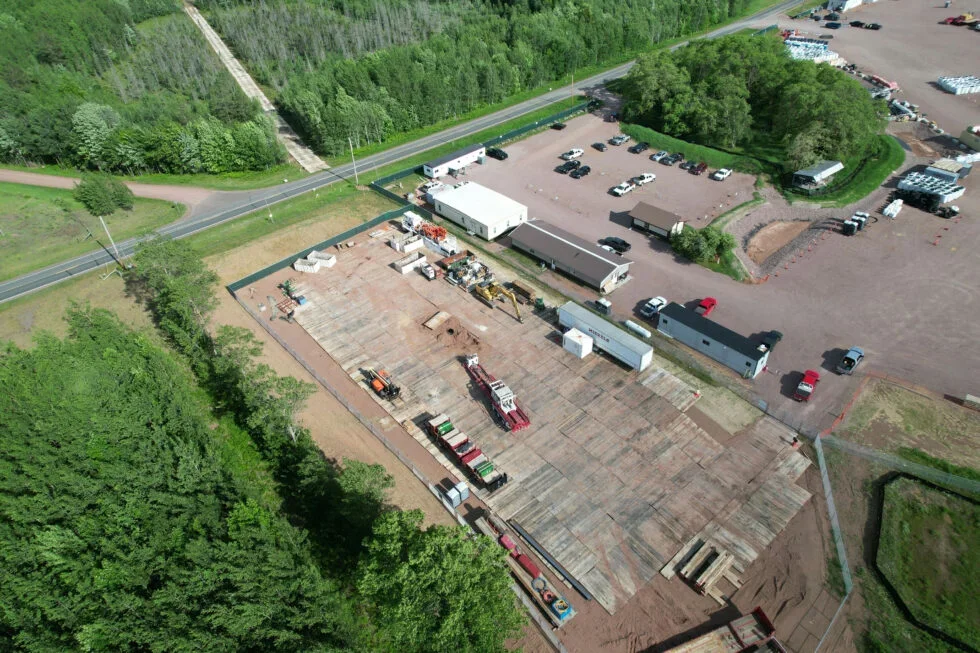
This above photo documents the Horizontal Direct Drilling machine (a white and red piece of machinery) at the center of one of the drill pads, several feet removed from one of the bore hole. At the site of the bore hole, the newly installed pipe is visible. The drilling equipment was moved shortly after these photos were taken.
HIGHBRIDGE, WI — Drone photographs taken on June 12, 2026 show the fist Horizontal Directional Drilling event of the Line 5 reroute. Contracted out to Michel’s Construction, this event is the first of 12 bores under 23 sensitive waterways flowing into the Bad River Watershed. A citizen monitor, posting to a grassroots monitoring database WatchLine5.com, shared pictures of the likely completed activity with an accompanying note:
“Completed HDD destruction. Likely started early last week and finished today (06/12/2026). Horizontal Directional Drill appears to have started on the east side of Silver Creek and fished on the west side of Highway C, where there is equipment, water trucks, and pipes being welded.”
Community monitoring images are available at https://airtable.com/appv2wvBEYWIDzDH1/shrs8E5U5bu1jVf4z/tbld7hLfYxOb0DFy8. Photos attached show evidence of Enbridge’s drilling activities underneath the Silver Creek.
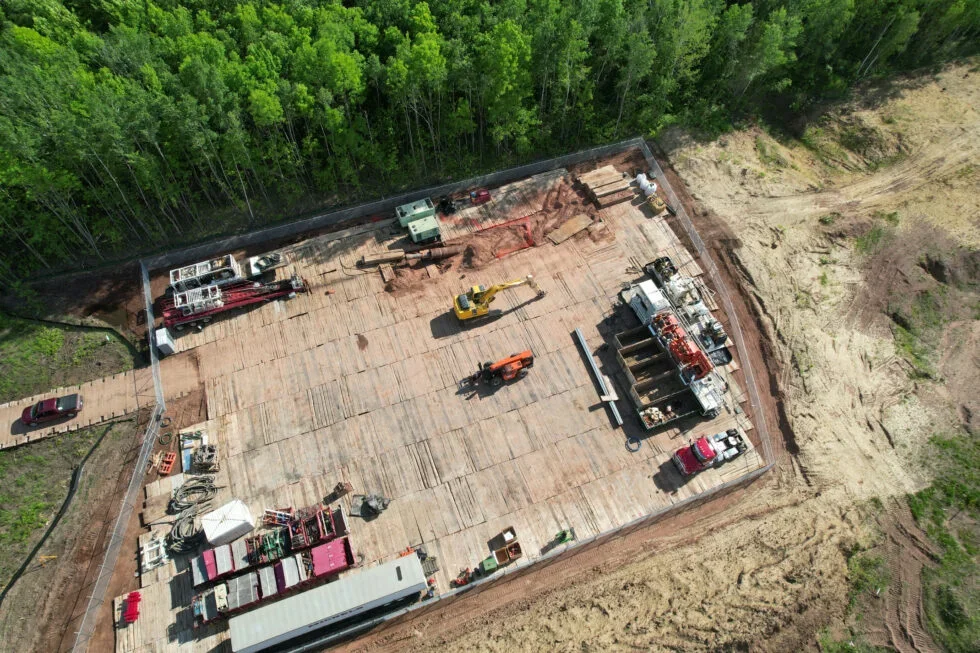
The above photo shows the opposite drill pad, covered in matting, with drilling equipment emerging from the ground. It is not publicly known if this drilling activity resulted in an ‘inadvertent release’ of toxic chemicals to Silver Creek, though monitors will continue to watch for signs of environmental damage.
These construction activities result in intense ecological harm. The installation of matting destroys habitat and remove carbon sinks. Additionally, many trees need to be cleared to perform a Horizontal Direct Drill, on the entry and exit points of the drill as well as along the access roads built to transport equipment into the drill site.
Enbridge’s recent history of Frac outs during the Line 3 project
HDD machines use special drilling fluid in their operation called “drilling mud.” Though the exact composition of this material is unknown, Enbridge claims the fluid is comprised mostly of bentonite clay, with additives which, according to the Environmental Impact Statement, “are listed on the DNR’s Approved Horizontal Directional Drilling Products List.” On this list includes four materials which contain “proprietary ingredients,” meaning even if Enbridge’s claim is true, the public is not privy to the ingredients of all possible additives in the fluid. Drilling fluid is known to escape the bore hole during the drilling process, in events called “frac outs.”
According to the Line 3 citizen monitoring group Waadookawaad Amikwag (Those Who Help Beaver, in Ojibwe), “Enbridge reported frac-outs at 67% of their HDD crossings and water protectors identified additional sites that might be un-reported frac-outs.” These frac outs documented during the construction of Line 3 resulted in the Minnesota DNR issuing Enbridge a $3.3 million fine, while drilling fluid impacts the land for generations to come.
Enbridge spilled drilling fluid 28 times at 12 river crossings in the summer of 2021 during the construction of their Line 3 pipeline expansion project, according to the Minnesota Pollution Control Agency. The largest of these officially documented spills was 6,000 – 9,000 gallons of fluid released into a sensitive Minnesota wetland ecosystem. Acknowledgement of those ‘inadvertent releases’ of toxic drilling slurry was only possible due to the work of diligent citizen scientists and community monitors who noticed the spills first.
Enbridge subcontractor Michel’s construction’s attempted to sign a contract with the city of Ashland for the sale of water for use in their drilling efforts. Substantial public opposition at city council and public works meetings led to no signing of a contract allowing such water use from the Ashland city council in February 2026, or after. Despite the lack of contract to sell water between Ashland and Michel’s construction, community monitors have witnessed water trucks filling at Ashland Water Utility facilities. The community deserves a clear answer to the question of where Enbridge is getting water to supply these drilling sites.
Ongoing Court Case
Line 5 Construction is in full swing despite a partial court-ordered stoppage, and the unresolved status of their ongoing court case. The Bad River Band and Midwest Environmental Advocates filed petitions for judicial review of the pipeline’s permits. The federal government pressured a US district Judge to stay his order of a permanent injunction on oil flowing through Bad River by June 2026 – the resolution of Bad River’s win against Enbridge trespassing on their sovereign territory. Enbridge is now legally allowed to continue to operate the existing pipeline through the reservation until the Seventh Circuit court resolves appeals on the case sometime this summer.
The Bayfield County court ruled on parts of those petitions in Mid-May. WPR summarized the decision:
“Canadian energy firm Enbridge can keep building a new stretch of its Line 5 oil and gas pipeline in northern Wisconsin except in waterways where the company needs additional permits, a Bayfield County judge ruled Friday…Under the ruling, Enbridge can’t move ahead with construction of permanent structures to stabilize banks in four creeks where erosion could threaten water quality or exposure of new pipe that would be installed.”
Enbridge, in their own promotional material, has indicated that they will continue construction of the entirety of the rest of the pipeline. The company gambles with the possibility of not receiving their permits with the tacit understanding that they will be able to successfully maneuver their case in the the legal system.
The partial stay on construction means that they can do construction as planned, all along the reroute, excepting the 4 locations where “permanent stabilization measures” are needed at water crossings. These kinds of stabilization measures require permitting since they can have dramatic impacts on waterways, which are a public good. The four streams that need individual permits are Bay City Creek, Bear Trap Creek, Little Bear Creek, and an unnamed tributary of the Brunswiller River. Up until June 15th, 92 of the navigable waterways the new pipeline route will cross will have prohibitions on work: those restrictions are to protect spawning fish.