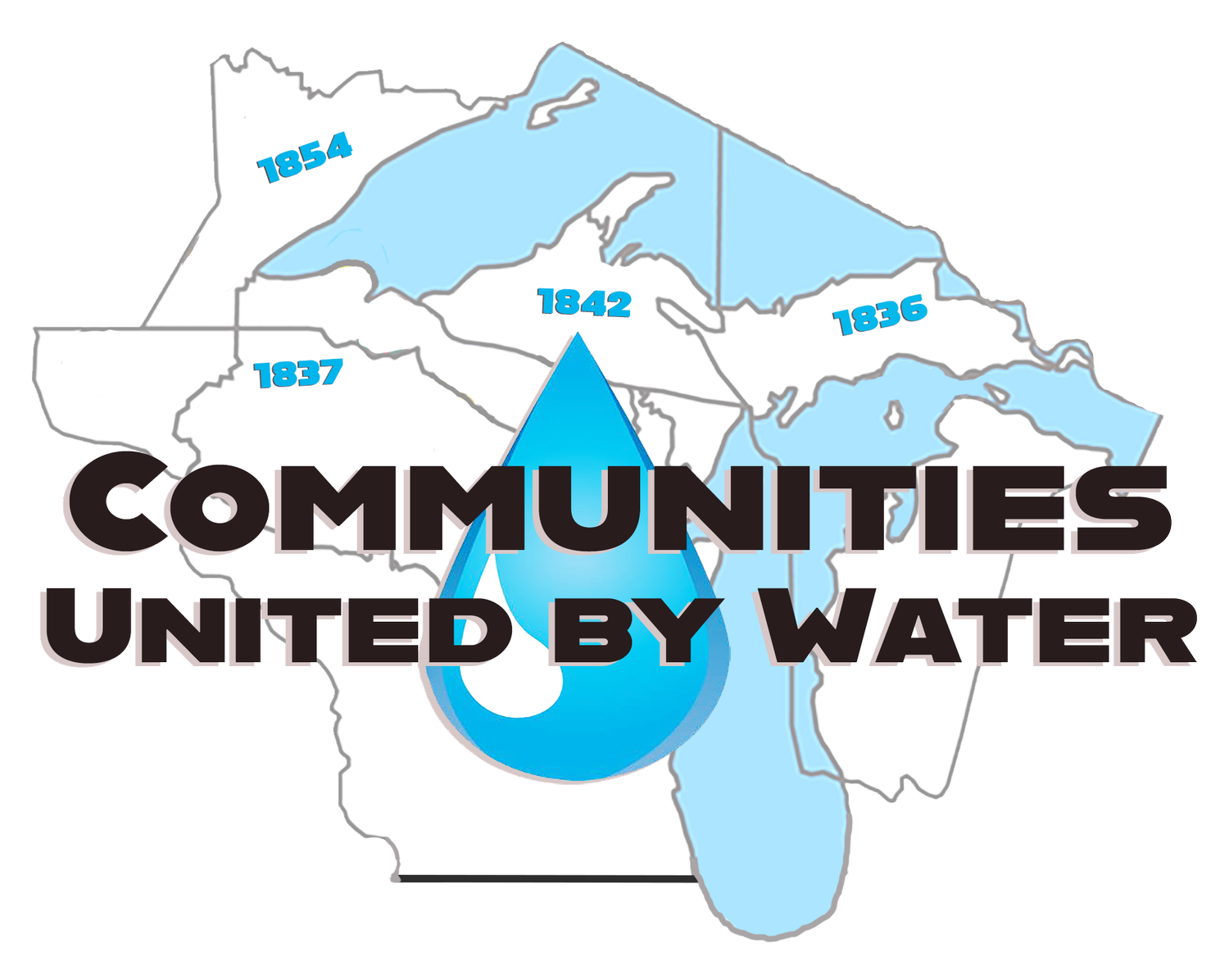
This series follows Enbridge's ongoing construction of the Line 5 oil pipeline in Wisconsin. Right now, Enbridge is building their "re-route" section of the pipeline around Mashkiiziibii (the Bad River Reservation), posing a continual threat to Indigenous sovereignty, Lake Superior, the Bad River Watershed, and the land.
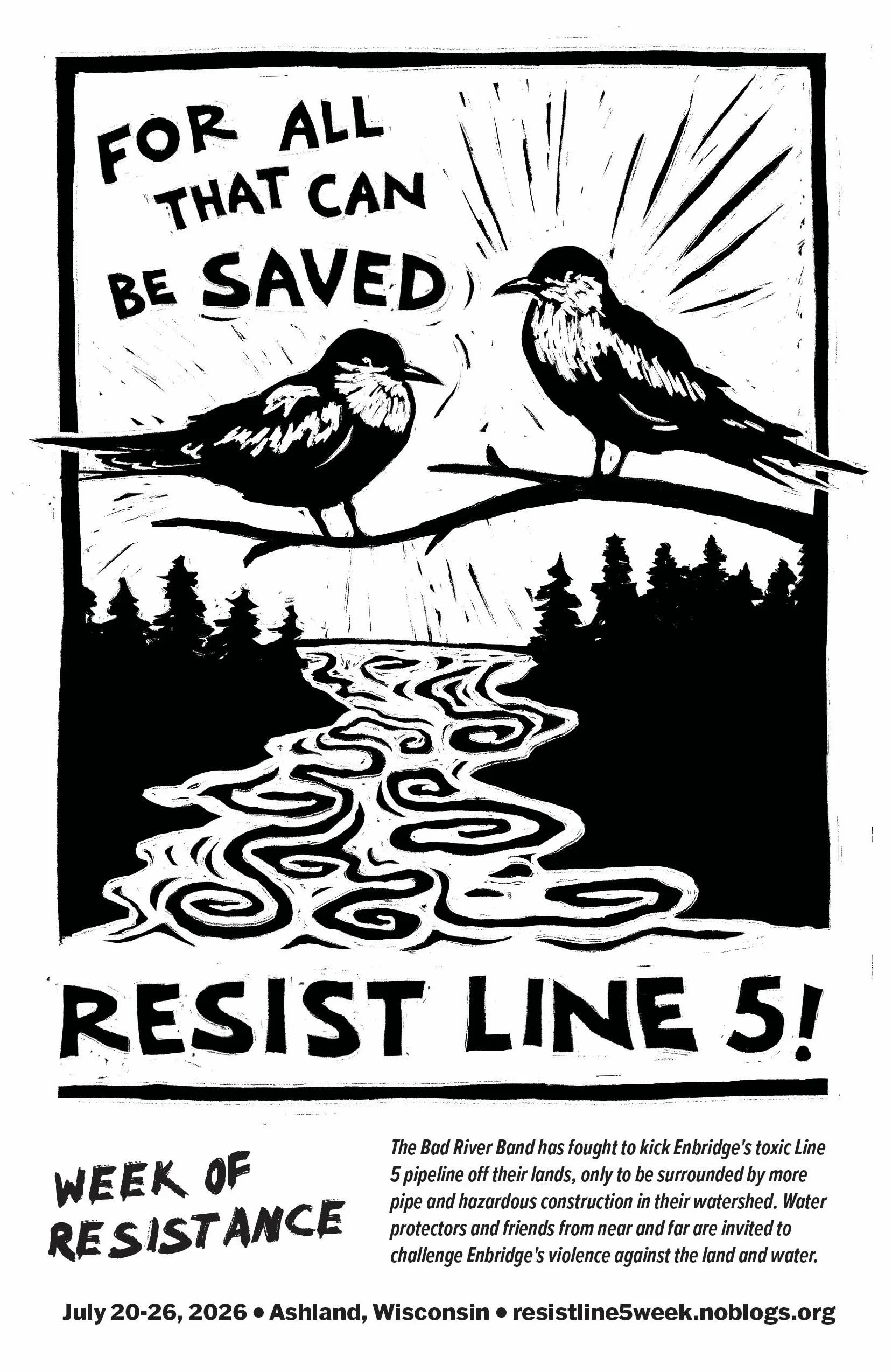
Join the Week of Resistance! From July 20–26 in Ashland, Wisconsin, water protectors near and far will come together to resist Line 5. Learn more, find your own camping, and RSVP for meals via resistline5week.noblogs.org.
What is Line 5?
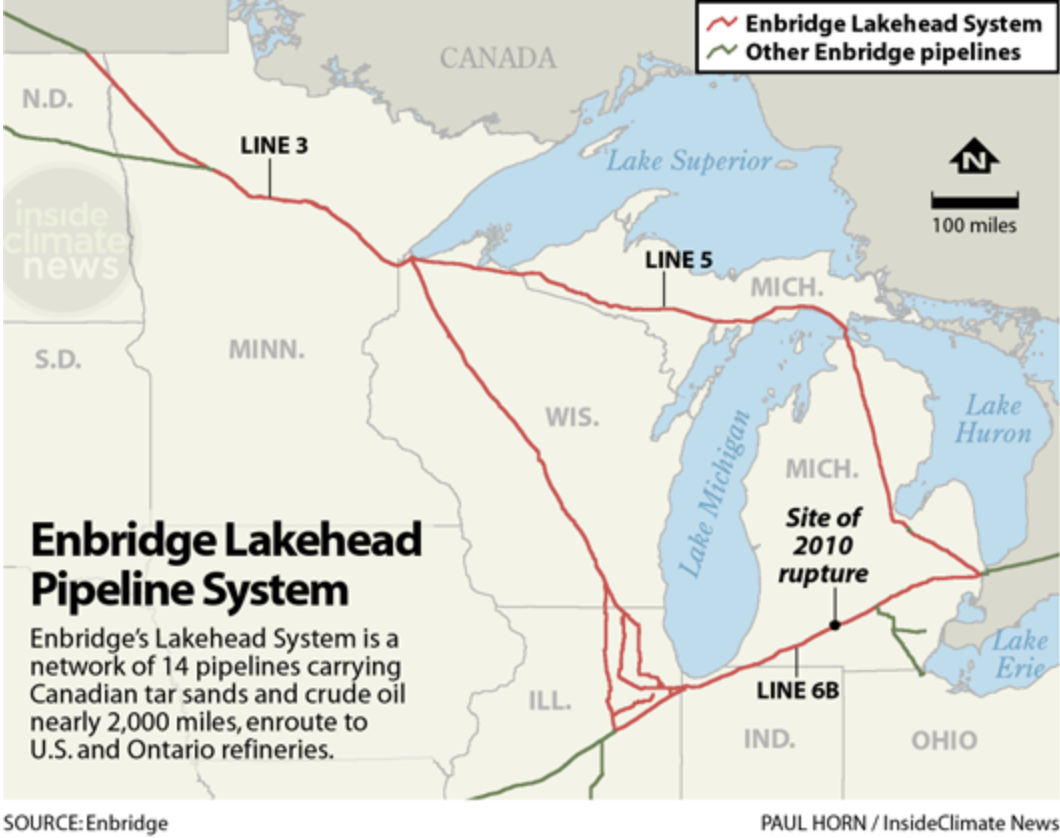
Line 5 is an oil pipeline built in 1953 through Wisconsin and Michigan without the consent of local Tribal Nations. Line 5 is part of the Lakehead Pipeline System, a network of pipelines that carry oil from the Canadian Alberta tar sands. Since being built, Line 5 has spilled a total of 1.1 million gallons of oil, violating Indigenous treaty rights and causing immense damage to local watersheds and ecosystems.
The existing Line 5 is owned by Enbridge, the multi-national corporation responsible for the Line 3 pipeline in Minnesota, which faces over a decade of resistance from thousands of community members. Instead of cleaning up their old, leaking pipelines, Enbridge is now building new sections of pipe along the Line 5 route: a new section under the Straits of Mackinac lake bed, and the Wisconsin re-route around Mashkiiziibii (the Bad River Reservation).
What is the Line 5 Re-Route around Mashkiiziibii?
In 2023, the Bad River Band of Lake Superior Chippewa won a lawsuit against Enbridge. The courts ruled that Enbridge is trespassing on their land by operating the old Line 5 through the heart of the Reservation, and ordered the company to pay $5.1 million in damages. This legal victory is part of the long legacy of Indigenous-led resistance to colonialism and extraction in the Great Lakes region and beyond.
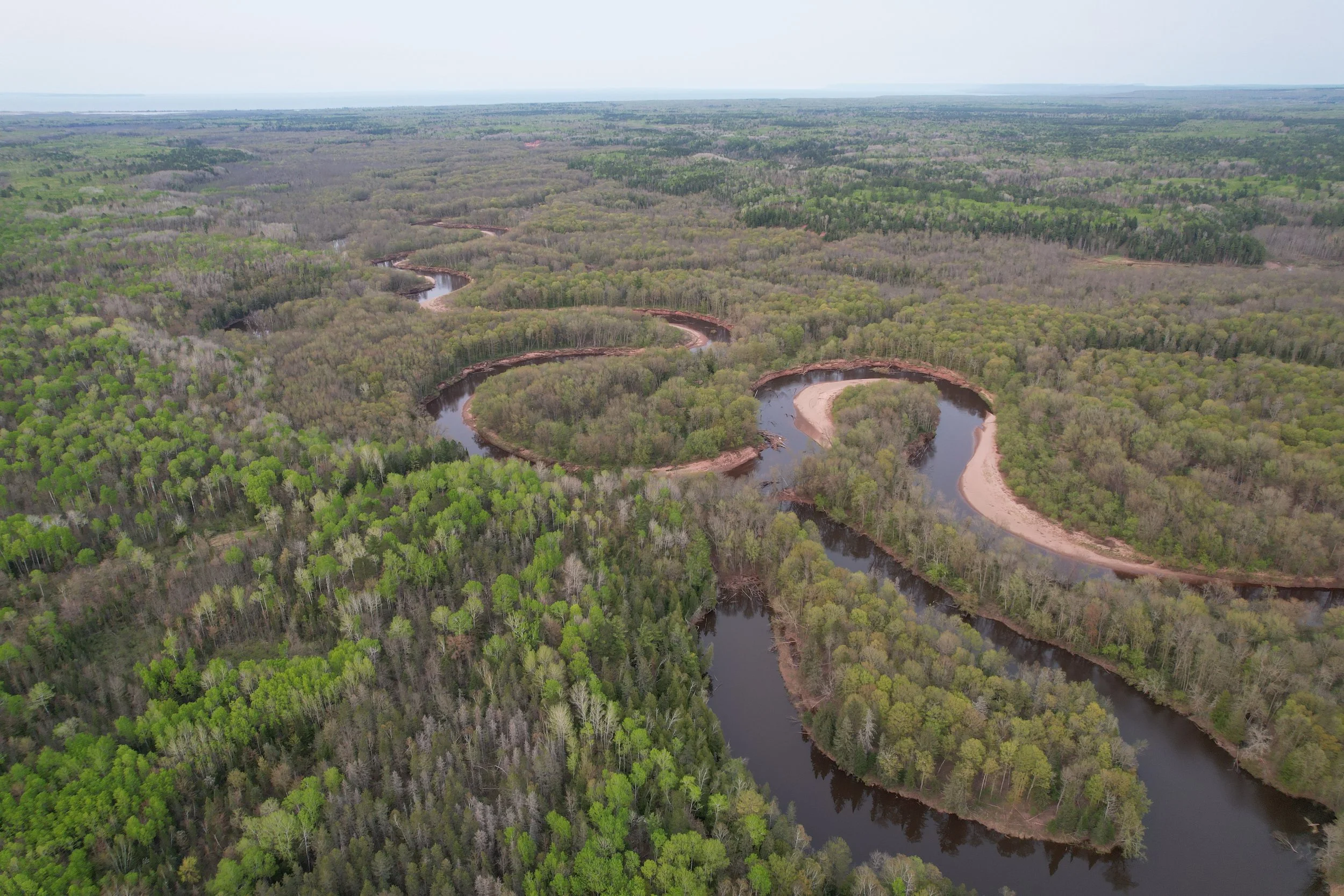
When the Bad River Band sued Enbridge for trespassing, it cited the risk of a catastrophic oil spill where Line 5 crosses the Bad River. At this spot, called “the Meander,” the river is less than 10 feet away from eroding into the pipe.
Sadly, Enbridge is continuing to operate and build new sections of Line 5. Instead of cleaning up the old line, Enbridge is building a brand new "re-route" section around the perimeter of the Bad River Reservation. This "re-route" is just another direct attack on Indigenous sovereignty, threatening further harm to the Bad River Watershed, Lake Superior, and the land. The Bad River Band had demanded that Enbridge to leave their watershed, but the company refused.
In 2024, Enbridge offered the Bad River Band $80 million in exchange for allowing Line 5 to continue trespassing on Tribal land. The Band replied by issuing an open letter in which they declared, "our homeland, our treaty rights and our way of life are not for sale."
What does Line 5 threaten?
Line 5 threatens Indigenous communities and sovereignty, the land, the water, the climate, non-human relatives, and the very future of the planet.
Line 5 exists in violation of multiple treaties with Tribal Nations, such as the Treaty of 1854. Pipeline construction also brings with it an influx of workers who are typically out-of-town men, housed in "man camps" that directly contribute tothe Missing and Murdered Indigenous Women and Relatives crisis (MMIWR). The fossil fuel industry is inherently tied to colonialism and violence against Indigenous communities, and must be stopped.
Not only is it incredibly destructive to build an oil pipeline — involving clear-cuts, dragging heavy equipment through wetlands and drilling underneath waterways using a slurry of mud and toxic chemicals — the pipeline then causes ongoing disasters through oil leaks.
It is not a question of if the pipeline will spbut when. And Enbridge has a miserable track record. They're responsible for over 800 spills in the last 15 years, including several of the largest oil spills in recent history: in Kalamazoo, MI (>1,000,000 gallons in 2010), Grand Rapids, MN (1,700,000 gallons in 1991), and Jefferson County, WI (~69,000 gallons in 2024). Their natural gas pipelines have also caused devastating explosions in Ohio, Texas, and British Columbia.
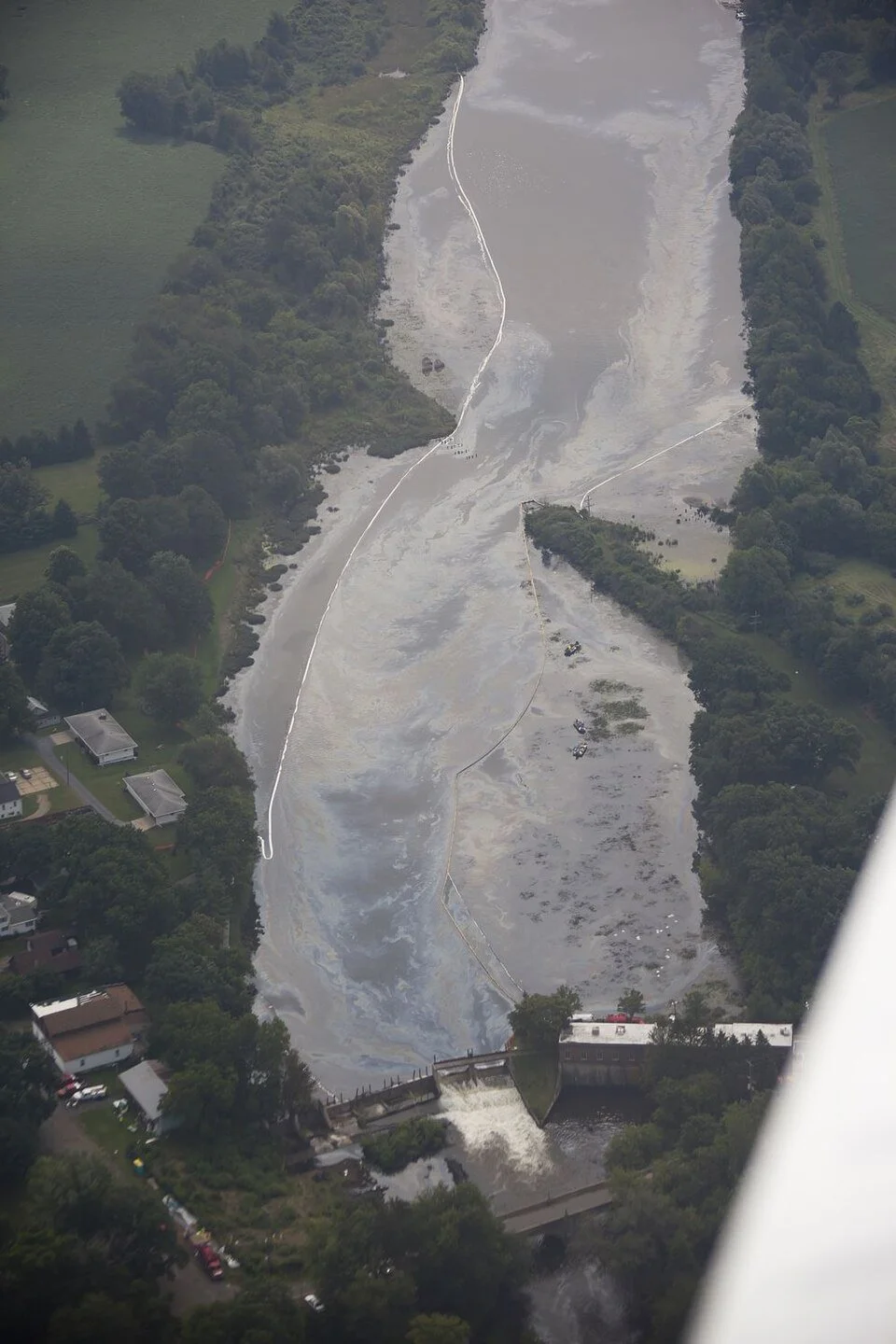
August 9, 2010 - Aerial view of Kalamazoo River oil spill (source: U.S. EPA via Wikimedia Commons)
The oil in the pipe is extracted in the Alberta tar sandsin mining operations that stretch across an area bigger than all of England. The mining has cleared nearly 2 million acres of boreal forest, created massive tailings ponds filled with toxic waste, and caused local health crises, particularly for Indigenous communities.
In the face of climate catastrophe, which threatens the very future of our species and our non-human relatives, more fossil fuel infrastructure is the last thing we need. Enbridge should be removing their old, leaking pipes, not building new infrastructure that fans the flames of collapse.
Enbridge Lies
Enbridge has a long history of pouring money into public relations campaigns to try and trick us into believing their pipelines are safe and necessary, despite all the evidence saying otherwise. With Line 5, they have continued this tactic through intensive regional advertising, in an effort to drown out voices of resistance. They've mailed open letters to thousands of households in Bayfield and Ashland counties, they sponsor local radio stations, sports teams, and events, they donate to local law enforcement offices, and they have full page ads in every edition of the Ashland Daily Press.
But we don't have to listen to Enbridge's lies, including the myth that Line 5's existence is good for the economy. Contrary to Enbridge's claims, we know that Line 5's existence doesn't actually lower local gasoline prices. The Bad River v. Enbridge case showed that gas prices in Wisconsin and Michigan would only go up by half a cent per gallon if the pipe was shut off.
What's happening now?
Enbridge is building the Line 5 Re-Route right now. They could complete construction on Line 5 by the end of the summer, although it may take months longer.
Already, Enbridge has clear-cut forests and started Horizontal Directional Drilling (HDD) underneath waterways, including Silver Creek, to build the Line 5 re-route. They have been using Ashland's municipal water, contaminating it with an 'industry secret' mix of toxic chemicals that enable them to drill.
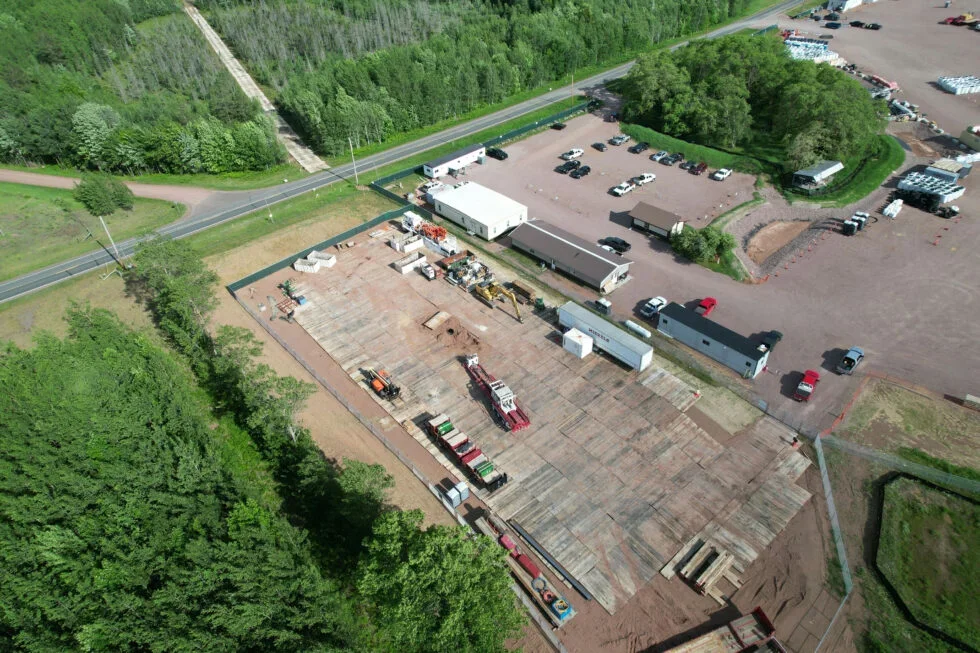
Enbridge equipment at Silver Creek Horizontal Directional Drilling site.
On June 24, 2026, community members gathered at the Ashland water station to protest Ashland's cooperation with Enbridge. In a statement, they wrote: "The city of Ashland is helping this multibillion dollar fossil fuel corporation desecrate our water and assisting Enbridge in their continued poisoning of our home… We’re choosing life, not death."
What can we do to stop Line 5?
It is urgent that we come together, drawing on a variety of tactics and strategies, to stop construction and defend the land.
Join the Week of Resistance! From July 20–26 in Ashland, Wisconsin, water protectors near and far will come together to resist Line 5. Join us in monitoring construction, making art, sharing stories, learning from each other, and rallying to bring awareness to the Missing and Murdered Indigenous Women & Relatives crisis. Learn more, find your own camping, and RSVP for meals via resistline5week.noblogs.org.
Learn More:
Zine: Oil In The Lakes
Wisconsin Re-Route Maps: https://watchline5.com/wisconsin-reroute/
Watch Line 5 Monitoring: https://watchline5.com/report-form/
Self-driving tour of the Bad River Watershed: https://arcg.is/br48O
Communities United By Water: https://communitiesunitedbywater.org/
The Great Lakes Indian Fish & Wildlife Commission: https://glifwc.org/
Bad River Documentary