Wisconsin's Black Snake: Ecological Context for the Line 5 Re-Route
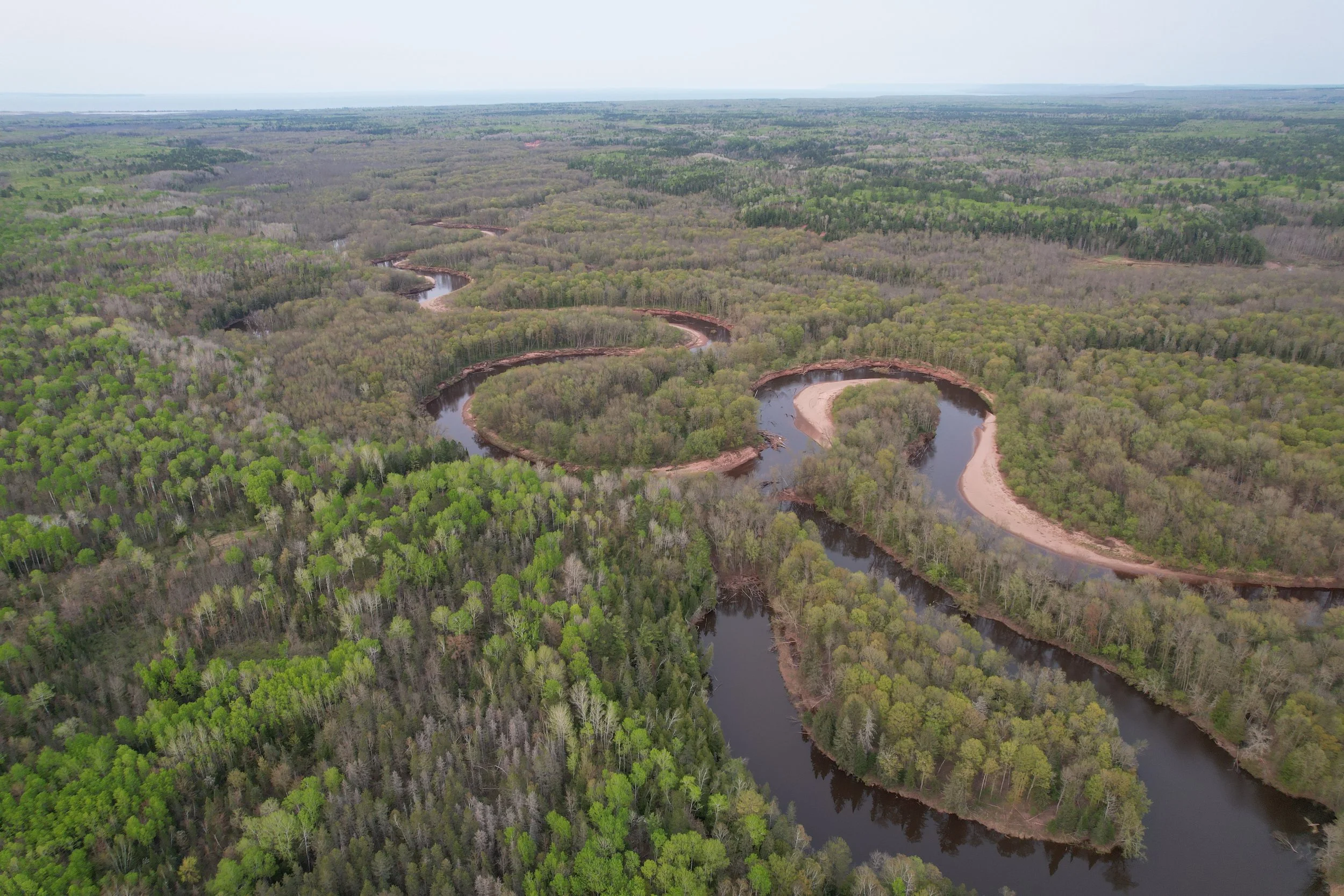
At the Bad River’s “Meander,” the river is poised to cut through the narrow strip of land supporting the 73-year-old Enbridge Line 5 pipeline.
This series follows Enbridge's ongoing construction of the Line 5 oil pipeline in Wisconsin. Right now, Enbridge is building their "re-route" section of the pipeline around Mashkiiziibii (the Bad River Reservation), posing a continual threat to Indigenous sovereignty, Lake Superior, the Bad River Watershed, and the land.
Join the Week of Resistance! From July 20–26 in Ashland, Wisconsin, water protectors near and far will come together to resist Line 5. Learn more, find your own camping, and RSVP for meals via resistline5week.noblogs.org.
Enbridge’s pipeline construction sets off a cascade of damage to the local waterways that all life here depends on.
It's wet out there: 15% of Wisconsin is wetlands and 75% of our species depend on them. The Line 5 reroute would allow Enbridge to continue endangering precious ecosystems like the Kakagon Sloughs, the largest wetland complex on Lake Superior and a recognized Wetland of International Importance.
The threat of an oil spill from Line 5 is always looming. The pipe is especially vulnerable at a spot on the Bad River often referred to as 'the meander'. The river is moving - as it does naturally - and the pipeline is incompatable with the river's new path. In that very remote location, Enbridge wants to move earth to bolster the integrity of the pipeline. Justifiably, Bad River officials are skeptical of that plan. Former Tribal Chair and fierce advocate Mike Wiggins Jr. describes the river's movement like this:
" ... Our land and water are leading us in that effort to reject Line 5. I would say that the power of the bad river, the actual mashkii ziibii, the river itself: if left alone that river would have that Line destroyed in a matter of under 10 years. There's another spot where, and I like to look at the world this way, where the thunderbirds came and pounded our land and blew out a huge beaver dam that released and slammed right into the Line 5 area, and created another area where line 5 is compromised and on its way to disaster. The work of those thunderbirds, the work of the power of our river, are clear, tangible, animate leadership signals to us that the manidoog and our home says: ‘No. Get out.’ And so we're gonna follow it up with the work that we have to do, as a tribe, as a people, to get Enbridge off of our reservation and remove that imminent threat to our waters and to Lake Superior herself."
Pipeline construction is dangerous and complicated. Here are some of the environmental threats of this project laid out by Midwest Environmental Advocates:
Sensitive Ecology
• The pipeline would cross the Bad River and Tyler Forks River just upstream of Brownstone Falls. The powerful waterfall would act as a chute during a spill, carrying the toxic oil downstream faster than humans could respond. The WDNR's draft Environemntal Impact Statement (EIS) explicitly said cleanup of an oil spill in the falls isn't possible. As extreme precipitation events driven by climate change increase, so does the possibility of catastrophic spills.
Impacts of Construction
• Enbridge wants to dredge and blast its way along a route that stretches for more than 40 miles, crossing nearly 200 waterbodies and impacting more than 100 acres of wetlands. They also want to bore underneath several rivers and streams using a horizontal directional drill.
• Horizontal directional drilling involves injecting a slurry of bentonite clay and fracking fluids into the ground. The pressurized mud can escape along fractures and through permeable layers (called a frac-out) and kill vegetation, harm aquatic life and pollute waterways. Frac-outs are already happening on the reroute.
• During the construction of Line 3 in northern Minnesota, 28 frac-outs occurred at 19 crossings. Enbridge has yet to remediate this harm and can’t be trusted to responsibly cross waterways.
• The longterm presence of a pipeline impacts the way water is able to move. In-stream blasting, intended to fracture bedrock, can fundamentally alter the way water gets in and out of a stream, bringing harm to sensitive aquatic species like trout.
• In its permit application materials, Enbridge mischaracterizes the impacts of clearing forested wetlands as "temporary" when it would take decades for vegetation to recover. These impacts would also stretch far beyond the construction sites, given the interconnected nature of wetlands.
These are some of the threats that the existing pipe and the new construction pose to the ecology of the Bad River Watershed. But ecology can feel like a flat way to talk about the diverse and miraculous communities of beings that live in that place.
Think on the ogaa (walleye) and the name (sturgeon), who raise their young in the Bad River and Kakagon sloughs, the baapaagimaak (ash trees), who love to have their roots wet and who live second lives in traditional basketwork. The grandmother ziinzibaakwadwtaig (sugar maple trees) who are so wide that two people combined couldn't hug them and have their hands meet. There are engangered bats, wood turtles orchids, and ferns, specialized bog species who have been part of their bog community longer than time.
What can we do to stop Line 5?
It is urgent that we come together, drawing on a variety of tactics and strategies, to protect this precious web of life.
Join the Week of Resistance! From July 20–26 in Ashland, Wisconsin, water protectors near and far will come together to resist Line 5. Join us in monitoring construction, making art, sharing stories, learning from each other, and rallying to bring awareness to the Missing and Murdered Indigenous Women & Relatives crisis. Learn more, find your own camping, and RSVP for meals via resistline5week.noblogs.org.
Learn More:
Zine: Oil In The Lakes
Wisconsin Re-Route Maps: https://watchline5.com/wisconsin-reroute/
Watch Line 5 Monitoring: https://watchline5.com/report-form/
Self-driving tour of the Bad River Watershed: https://arcg.is/br48O
Communities United By Water: https://communitiesunitedbywater.org/
The Great Lakes Indian Fish & Wildlife Commission: https://glifwc.org/
Bad River Documentary